
The Quietcomfort 2nd Generation
We are done with pretests of the Bose Quietcomfort 2nd generation, and are now going to full production.
We are really happy with how it turned out. So far the smallest headset adapter we have made, and the first one we are not using our magnetic fastening system on.
The unit can already be ordered at a introduction price. First delivery will take place in the end of this month (November 20206).
Update on delivery time
Update November 15th:
We are back to 3-5 days delivery time including the Bluelink Revision 4.
Update October 25th:
We are back to 1-3 days delivery time. Still backlog on the new Bluelink Revision 4 – but working hard to ship all units in order this month.
Update October 6th:
We still have a few days delivery time – but working as fast as we can to get rid of backlogs.
Original:
Due to a large number of orders, we have to introduce two weeks delivery time for a limited period.
Delivery is as usual according to the ‘first in – first out’ principle.
Update Oct 6th: The new Bose Quietcomfort 2nd generation
Please go to the bottom to find the latest updates!
While we are waiting for a rather large shipment of batterypacks for the upgraded Bluelink, we have taken a closer look at the new Bose Quietcomfort 2nd Generation (QC 2nd Gen).
We assume that this new headset from Bose is replacing for the previous versions (QC45) which came under a long list of names: QC45, Quietcomfort, QC SE and QC SC. All the same headset from our perspektive, but with a different case.
The real change with the introduction of the QC 2nd Gen, is the lack of the 2.5mm audio connector.
Initially this might seem to be the end of line for using these recreational headsets as aviation headsets, but it is not. On the contrary!
We are really happy to see the end of the 2.5mm connector on this Bose headset. Read more about this further down.
Pros:
- The headset looks strong & well designed, although the buttons look a bit “cheap”.
- It has the mechanical on/off switch that we love; now moved to the bottom side of the left earcup.
- Mechanical keys are available for adjusting volume levels , play and pause (when connected to bluetooth), and a separate key for adjusting noise cancellation.
- Easy to use – and that is very important!
- Battery life with ANR & Bluetooth on is specified to 24hrs.
We expect a much longer battery ife with ANR on and Bluetooth off (flight mode). This needs to be tested though (Bose do not specify anything here). - The Avee microphone will now be on the right side of the headset. Positive for some and negative for some. Most of us would not worry too much.
- The ear-cups are slightly larger than the QC35/45 version; we are talking around 2mm all sides.
.
Cons:
- The Bose 2nd Gen stops working when the battery is flat.
Not a real issue anymore because of the long battery life. - The headset can not not play back the battery level when pressing any button.
Meaning; remember to charge it before you fly!
It will however play a warning tone when the battery is low. - The cushions are the “old type” that are a pain to change (when you don’t know how to do it).
.
The big surprise!
But what comes as a surprise and relief to us at Avee, is that the 2.5mm audio connector is not present on the Bose Quietcomfort 2nd Generation headset.
Analog WIRED audio from an external source (like a computer, phone or an Avee aviation kit), is however supported by a USB-C standard called USB-C Audio Adapter Accessory Mode.
What this means
To make a long (and what could have been an incredibly interesting) story short, this means that the Bose Quietcomfort 2nd Generation supports BOTH USB and analog interface via its USB C port !
And of course Bose have added a 1m adapter cable with the QQC 2nd gen kit to be able to plug your headset into the back of 28D when you are in the back seat of an aircraft.
At Avee, we have lots of experience with the USB C connectors (we have used them on our Avees since our start in 2017), and we are really glad to see the 2.5mm connector go.
The USB C connector is a far better solution; more reliable, more sturdy (will we need the magnet connection ?) and easy to produce by machine.
The USB C connector only is really good news, and we expect Sony to go for the same solution in their next upgrades.
Practically it means that we will be able to add the Bose Quetcomfort 2nd Generation to the list of headsets we support within a 6 to 8 weeks.
We do strongly belive the QC 2nd Gen will be very popular as an aviation headset.
Thank you Bose – and thank you USB Implementers Forum (the girls and guys who are defining the USB standard) !!!
Update September 22nd:
The new Bose® QuietComfort 2nd Generation (New September 2026 )
We will support the new Bose® QuietComfort 2nd Generation with the USB C connector only. We are planning to release this product mid October 2026, but are coming back with the exact date.
We are currently designing the headset adapter for it, and will post images of as soon as we have something presentable.
Please note that if you plan to change your headset to the Bose QC 2nd Generation, and already have an Avee system; you will only need to get a new Avee headset adapter.
Update October 6th:
We have now got the Avee headset adapter circuitboard for Bose QuietComfort 2nd Generation, and can confirm that our electronics and the QC 2nd gen works like expected:
- Crystal clear audio from the Avee aircraft adapter is being pushed into the QC 2nd gen headset.
- We find it very easy to adjust the headset volume with the two mechanical keys on the headset
- The headset volume is automatically set to minimum when it is switched on.
- The headset startup time is around 8-10 seconds.
- We do not get any annoying latency between our own voice and what we get back in the headset (sidetone).
.
We are now finishing the design of the headset adapter itself, and we need acouple of weeks to do this job.
What we at this stage sees, is that it will be the tiniest adapter we ever made. And the easiest one to install and remove.
Revised release date for the Avee supporting the QuiectComfort 2nd Generation, will be around October 20th.
Updated GA & XLR-5 adapters
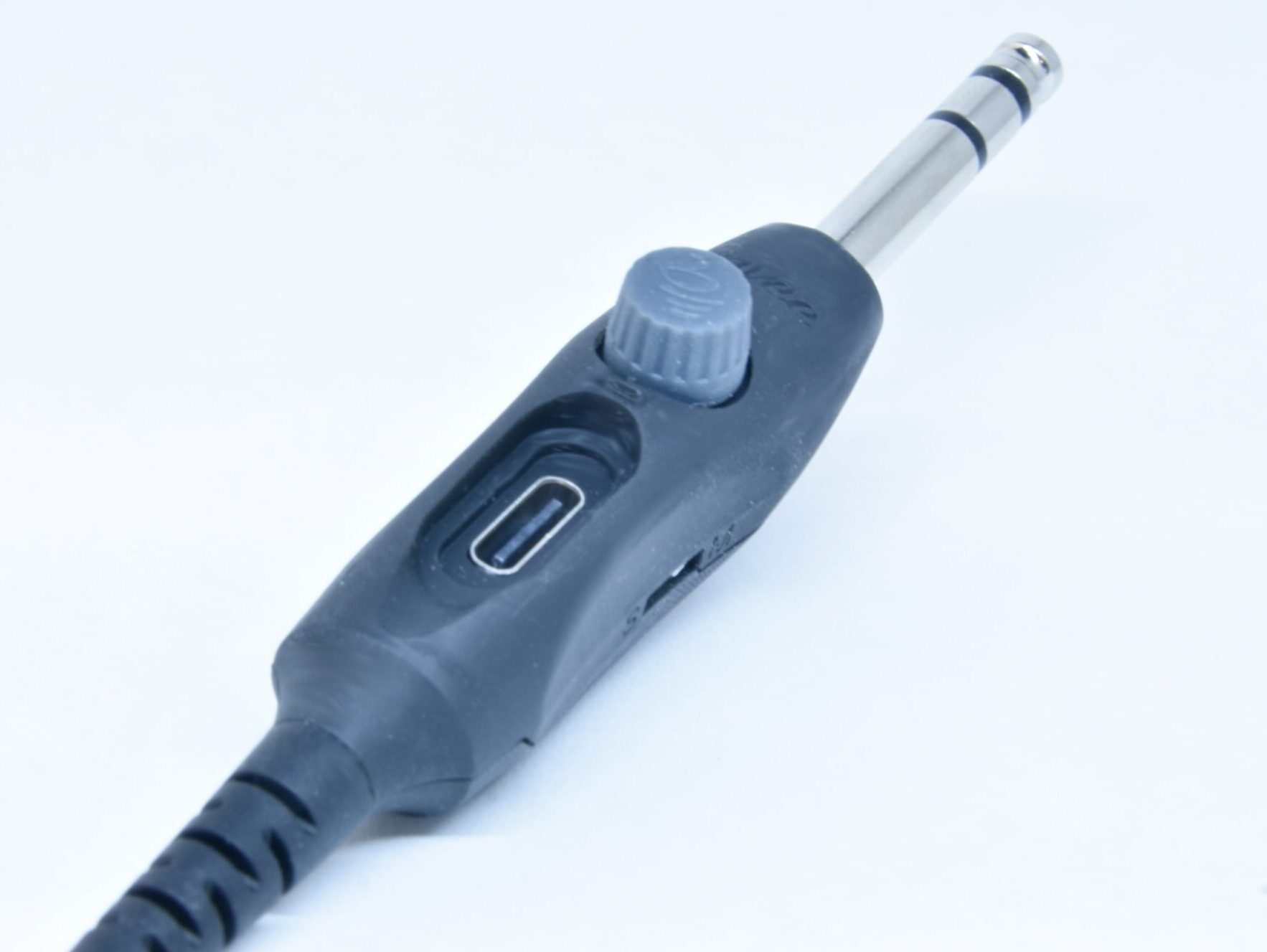
Our standard dual GA adapter has been redesigned substantially:
- The volume adjustment wheel is mounted beside the USB C cable connector, 90 degrees to the connector housing.
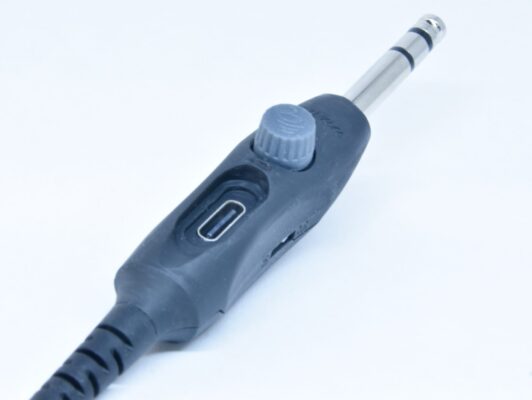
This solution makes it easier to adjust the volume – and it makes it easier for us to produce. The electronics componets inside the housing are now fully machine assembled.
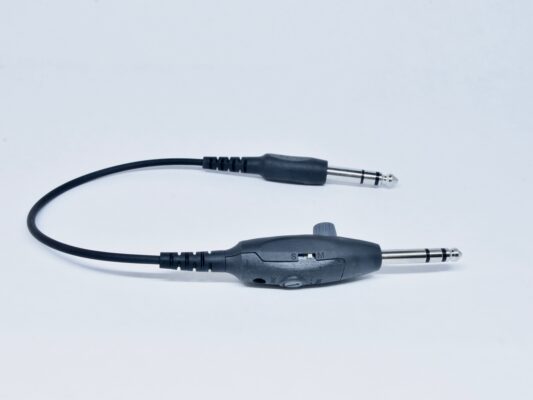
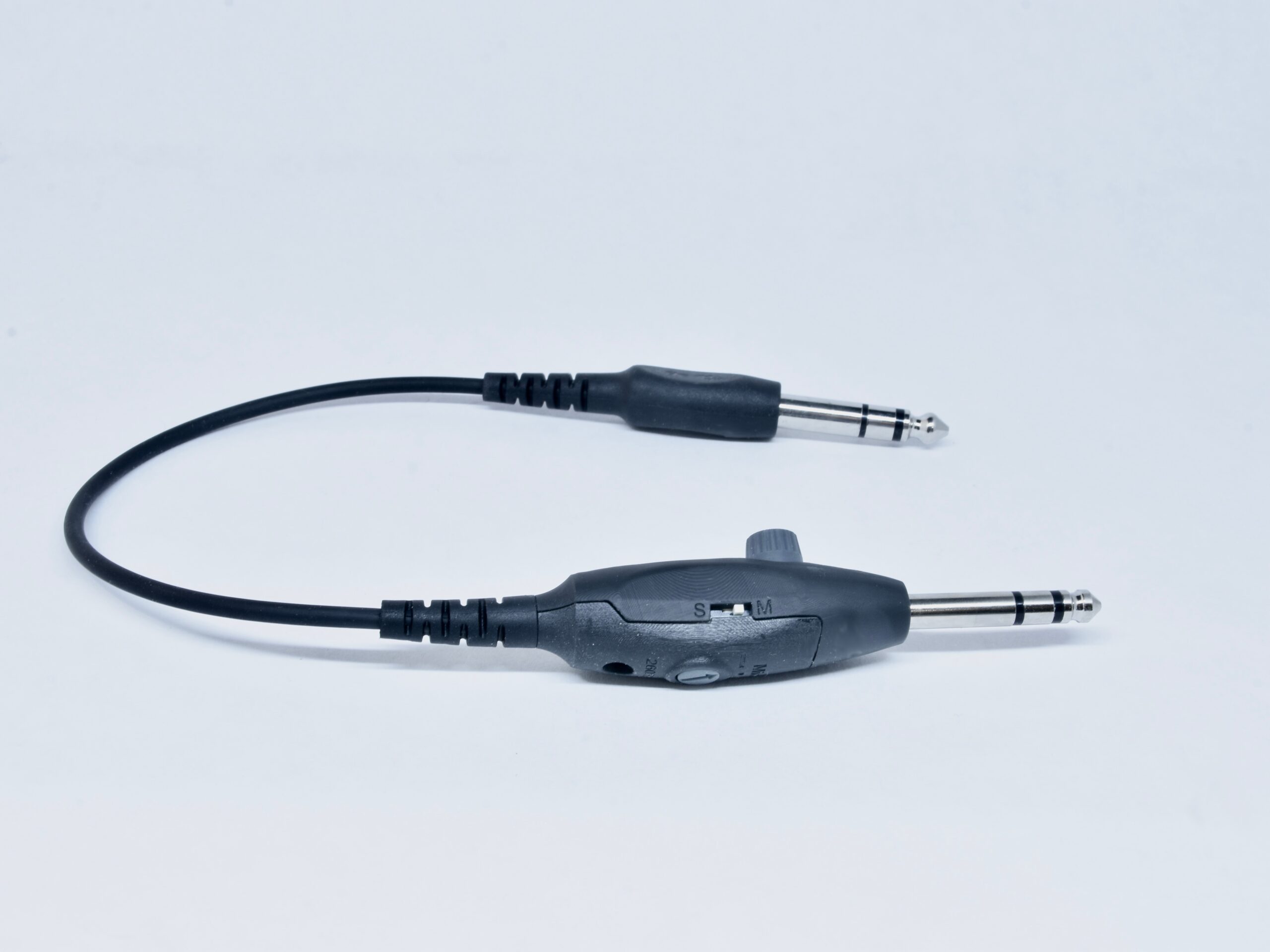
. - The microphone output level is still found on the rear side on the connector housing, but the level is now even easier to adjust without any tools ( the corner of any credit card does the trick).
It is however, important to mention that for 99.9% of all users,there are no need to adjust the mic output level.
. - The mono stereo switch is now found on the right side of the connector. Please use a pen or pencil to flip this mono stereo switch if needed.
Again: 99.9% of our avaitors use a mono avionics system, so there is no need to touch this switch.
.
- We have added more filtering to prevent noise from the aircraft engine (typically alternator noise and radio high frequency noise (when the ptt is pressed).
. - The red and green indication led is slightly brighter.
Green led:All ok.
Red led: Mic is not connected.
. - Last – but not least: The 5.2mm connector housing is around 13mm shorter than the previous version of the housing. This means less to carry on for you. For us it means reduced production time and costs.
.
.
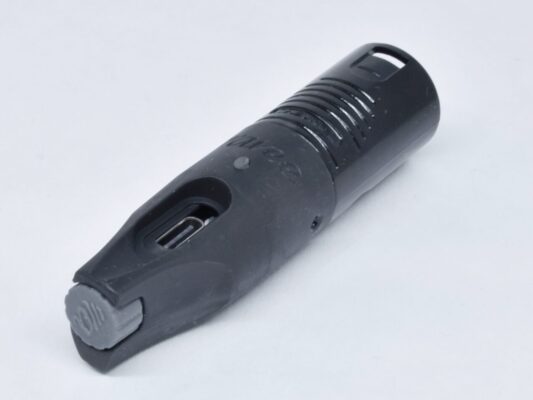
On the XLR-5 we have done some minor improvements:
- The length of the connector housing is slightly shorter.
.
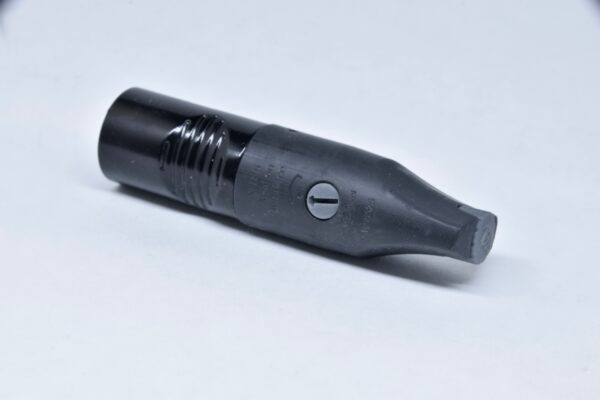
- Easier adjustment of the mic output level. Use edge of credit card.
. - Better designed knob for the headset volume adjustments.
.
- The red and green indication led is slightly brighter.
Green led:All ok.
Redled: Mic is not connected.
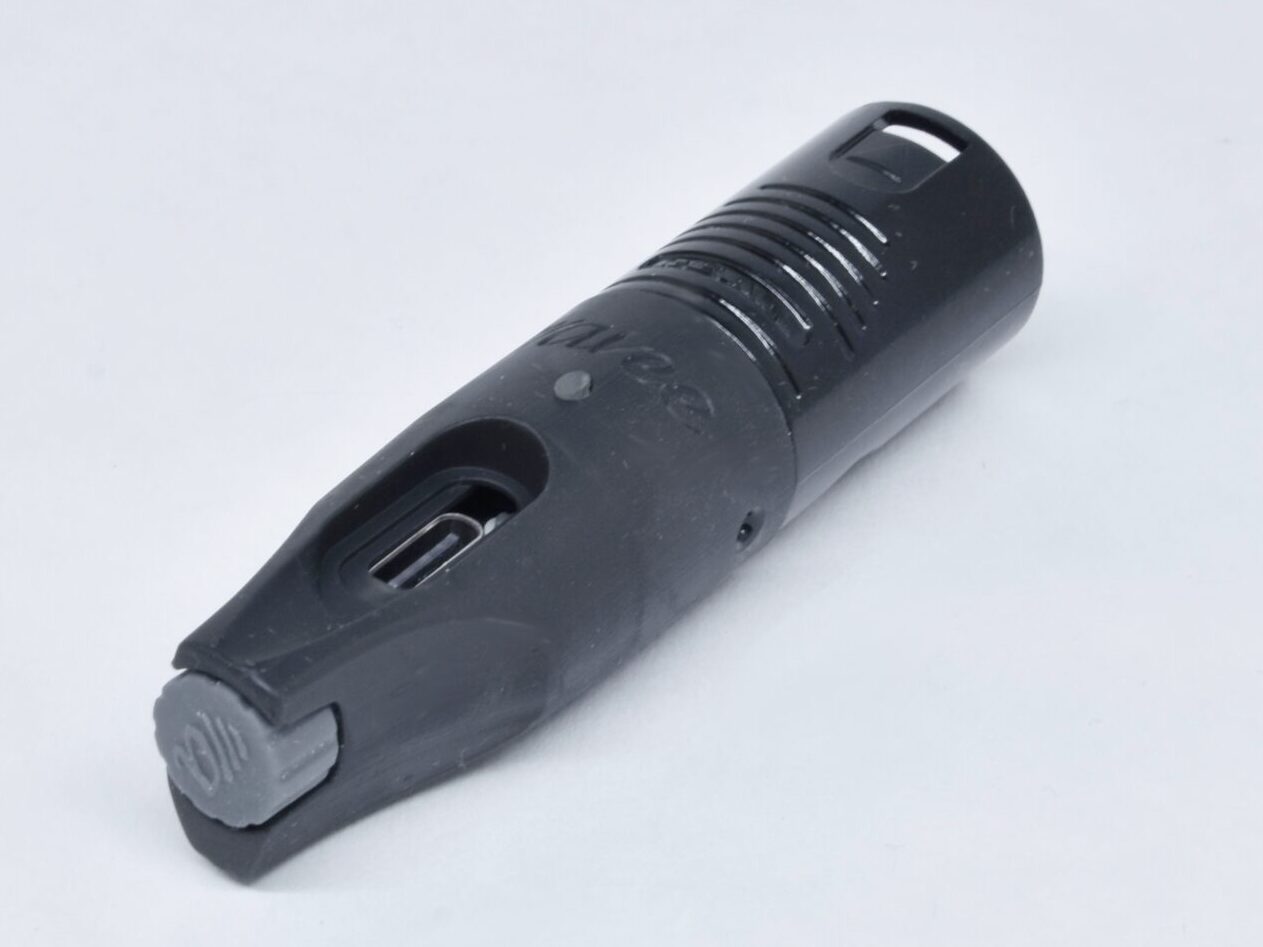
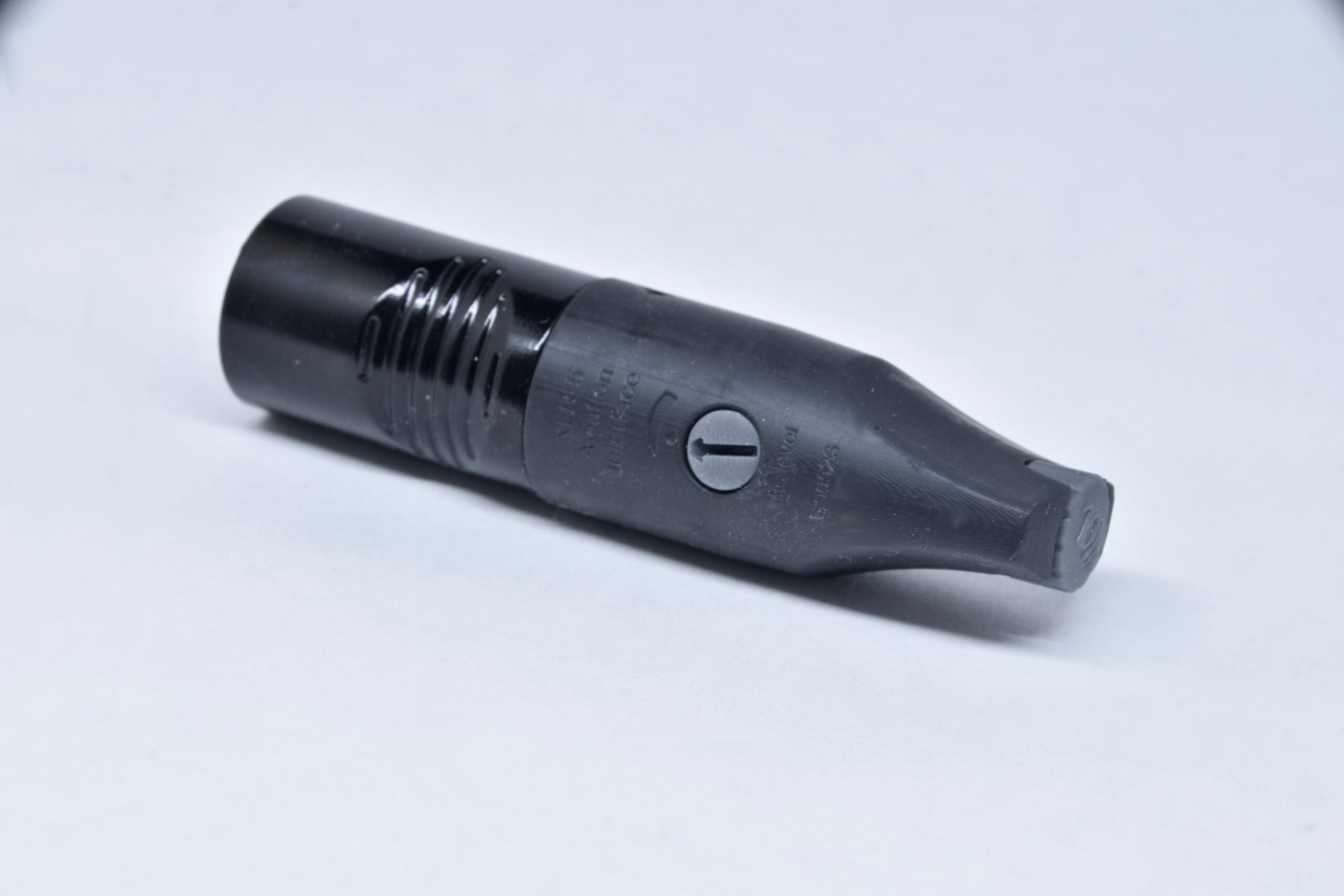
Please note: All new orders and already existing (non-fulfilled) orders (containing these adapters), will be delivered with these new adapters.
Shipments start June 24th.
The Sony XM6 test
A week ago, I had the pleasure of testing the Sony WH-1000XM6 in the DA40 (LN-NEZ), which we have a tiny (read super tiny) share in.
I have previously tested the XM6 as a passenger in a noisy 777 and was then somewhat stunned by the quality of the noise cancellation in the XM6.
‘Our’ DA-40 LN-NEZ has been going through a midlife upgrade since early this year, and has not been available for flying till now.
The midlife upgrade gave it a new engine (from 135hp to 155hp diesel), new (2x) radios, new digital instruments, all LED lights, new paint, plus several non-visible upgrades. All at a cost of around EUR 190k…
LN-NEZ has turned out to be an excellent aircraft for testing Avees – and for longer flights down to Germany, France and Spain!
The audio test
For the test of the XM6, we used the Bose QC45 to compare, mainly cause the Bose QC35 and QC45 have been our best sellers for years.
There is simply a difference both in comfort and in the level of noise cancellation between the QC45 and the XM6; all in favour of the XM6
- The basic comfort of these two headsets is comparable, but when using glasses, the XM6 feels much better on my ears.
This can be caused by the fact that the earpads on the Sonys are slightly larger than the earpads on the Bose (any Bose in fact).
The earpad is resting on the skull – and not on the ear, and I do believe that makes a difference.And for us men, the ears are sadly one of the very few body parts that are growing (apart from belly, nose etc etc).
. - The sound quality (when connected to the aircraft radio and intercom) on the Bose and the Sony is, for all practical purposes, comparable, but the noise cancellation on the Sony is really incredible and far superior to the Bose headsets.
This is easy to verify when switching headsets in flight!We strongly believe the the fact that the earpads on the Sony are made for real people with normal and functional ears, contribute to the superior comfort and noise cancellation
.
- Many pilots using the Bose QC45, complain about a tin-can-like sidetone when using the intercom & radio (this goes for the Bose 700 as well).
The side-tone is defined as your own voice being fed back to your headset when talking.
The radio & co-pilot audio comes in as normal.
The tin-can side-tone is not something we, to my knowledge, experience on piston engine aircraft; it seems to be an issue on some jet aircraft only.We have not received any reports of issues with tin-can sidetone on any Sony headset.
. - Autogyro review from Carlos
Carlos from the USA added a review 11th of March this year.
He has tested out the XM6 in an Autogyro (the scary thing with propellers all over the place).
That is interesting reading!
Check it out!
.
Ease of use
The Bose headsets have always been easy to use, but with the introduction of the QC45 series (including the SE, SC , Quietcomfort and numerous names for the same product), Bose added a volume control on the headset. And with the volume control, they also added the feature that the volume went to minimum if the headset was switched off or unplugged, with the Avee (or the 2.5mm connector) connected.
Clearly a bug but it is annoying and for sure not needed.
The Sony does not have this annoying feature: One button to turn on and the same button to turn off.
Both the Sony and the Bose work even when the battery in the headset is flat. Battery capacity is comparable; maybe a few hours better on the Sony.
Build quality and Avee implementation
The build quality of both the Bose and the Sony has always been excellent.
- Our general feeling is however, that the build quality on Bose headphones is going down, while Sony has chosen to go in the opposite direction.
It seems clear to us at Avee that Bose has cut costs on the electronics inside the headset. Sadly, we do get reports saying the same thing has happened on the Bose A30 vs the A20.
. - The earpads on the Bose tend to wear out fairly quickly, and they are more than a pain to replace (see below).
. - The Bose headsets have always used a fairly fragile 2.5mm connector for external connections, while Sony use more sturdy 3.5mm connection, which is simply a better choice.
. - The Avee headset adapter looks well on the Bose, but looks even better on the Sony!
.
Changing the earpads
After using the Bose headphones for a year or so on a fairly regular basis, you will need to replace the earpads. And this is something you can look forward to: it is a real pain. Simply because the build quality of the pads and the headset is not really good.
Finding good replacement pads can also be a real pain.
Changing the earpads on the Sony however, is a totally different story. You do it in less than one minute (with no practise apart from a YouTube video) and the pads that are normally available from the same store where you buy the XM6, are Sony-made and of excellent quality! Way to go Sony!
General use as recreational headsets
Both headsets work well as recreational headsets.
The Sony XM6 is more advanced because it supports Bluetooth Low Energy Audio, (BLE), but it is early days for BLE. Excellent audio quality for recreational purposes on both headsets.
Price level
You would expect that the price level on the XM6 is higher than on the Bose QC45 series, and this was correct some months ago.
Here in Norway, we would pay something similar for both the Bose QC45-series and the Sony XM6 (around EUR 350 + VAT).
Final words
If you do not have a headset yet – or want the best for your ears- go for- or even swap to – the Sony XM6. It is a better choice than the Bose.
If you already have a functional Bose, wait till the earpads wear out or until the headset fails: then go for a Sony XM6.
We talk to commercial and private pilots on a daily basis, and it is a bit scary how many pilots have hearing problems !
So: take care of your health! Invest in the best!
Final final words
If you already have an Avee with the QC45 (or similar) you need to purchase a new Avee headset adapter fitting the XM6.
As an existing customer, you get close to 50% discount on new products from us!
Aero 2026 in Friedrichshafen
As usual, we are going to the Aero fair in Friedrichshafen!
The fair takes place from April 22nd to 26th.
This year, we are sharing the stand with Mototok and Alphachocks.
See us in hall A2 stand 204!
Shipments to the USA
We are sad to inform that as of February the 22nd, all shipments to the USA are shipped as DAP shipments.
This means the buyer is responsible for paying all taxes and tariffs and handling fees when the shipment from us is received.
This change in shipment rules are caused by the political situation in the USA.
Local sales tax, tariffs, and fees are paid by the American people.
Olympic Winter Games gold discounts!

The Olympic Winter Games™ are here ! We celebrate gold medals from the Canadian and Norwegian teams with 48 hours 10% discount on all Avee products!
The rules are as follows; when (not if) Canada or Norway get a gold medal, we offer a 10% discount for 48 hrs.
Gold medals for Norway (18 in total): Anna Odine Strøm, Sander Eitrem, Johannes Høsflot Klæbo (five gold), Birk Ruud , Johan-Olav Botn, Jens Lurås Oftebro (three gold),Maren Hjelmeset Kirkeeide,
Kristin Austgulen Fosnæs, Astrid Øyre Slind, Karoline Simpson-Larsen, Heidi Weng,Johannes Høsflot Klæbo, Emil Iversen , Martin L. Nyenget, Einar Hedegart (two gold), Anna Odine Strøm (two gold), Tormod Frostad
Gold medals for Canada (5 in total): Mikaël Kingsbury, Megan Oldham ,ValerieMaltais , Isabelle Weidemann, Ivanie Blondin,Steven Dubois
Use the coupon code OLYMPICGOLD to get 10% discount- and remember the code is valid until the 23th 23:59pm only!
UPDATE: The Bose® Ultra & Bose® Ultra 2nd gen.
UPDATE: After confirming with Bose®, the Bose® QuietComfort Ultra 2nd generation is also useless when the battery goes flat.
Last year we decided to stop manufacturing the Avee for the Bose® Ultra.
The design of the Bose® Ultra and the 2nd generation, sadly, makes it unsuitable for aviation purposes – and even recreational purposes.
The Ultra has a good ANR and excellent comfort, but it does not work when the power is off or the battery goes flat.
The “no work when no battery” feature is even a problem when using it on long flights as a passenger and being connected to the aircraft entertainment system via a cable: the headset simply stops working when the battery is flat.
There are far better and more affordable solutions available that we do support: the Bose45/SE/SC/QuietComfort and the Sony XM3, XM4, XM5 and XM6.
Bluelink R3 Software upgrade
We have released a new software upgrade for the Bluelink R3 (the Bluelink with the volume wheel.
The following changes have been made:
- The Bluetooth volume can now be set from both the phone/pad and from the Bluelink R3 volume wheel.
- We have fixed a bug that created noise when in aircraft simulation mode (the noise came some 5-6 seconds after pausing music ).
- We have corrected a number of non-visible/audible bugs, which makes it easier for us to maintain the software.
.
How to do the upgrade
Follow the software installation guide on how to update the sw in the Bluelink R3.
This guide is found on Our Store -> The Avee Bluelink R3, and then press the ‘Updating the software tab’. Here you find the guide plus the software upgrade file.
Please note that this software update is valid for the Bluelink with the volume wheel ONLY!
If you have a previous version of the Bluelink, please contact us if you need a sw upgrade.
Phone support
We are working hard to finish the phone support part of the software for the Bluelink, and we do our best to release a sw upgrade supporting it within February (this year).
Special requests
If you have special requests for the Bluelink R3 – please feed them to us!
.